
Key Highlights
- The Home Textile Market is benefiting from growing consumer investment in home improvement and interior design.
- Demand for premium comfort and aesthetic enhancement is reshaping product development strategies.
- Sustainability initiatives are influencing material selection and purchasing decisions.
- Digital commerce is accelerating product discovery and consumer engagement.
- Home wellness trends are expanding demand for quality bedding and furnishing products.
- Manufacturers are increasingly focusing on innovation, customization, and design differentiation.
- Residential and hospitality demand continue to support market expansion.
Why This Matters Now
The home has become more than a place to live. It has become an office, a wellness space, an entertainment center, and a personal expression of lifestyle.
This transformation is changing consumer spending priorities. Home textiles are no longer viewed as functional necessities alone. Bedding, curtains, upholstery fabrics, and decorative textiles are increasingly treated as lifestyle investments. For manufacturers and retailers, that shift creates new opportunities for premiumization and brand differentiation.
Market Overview
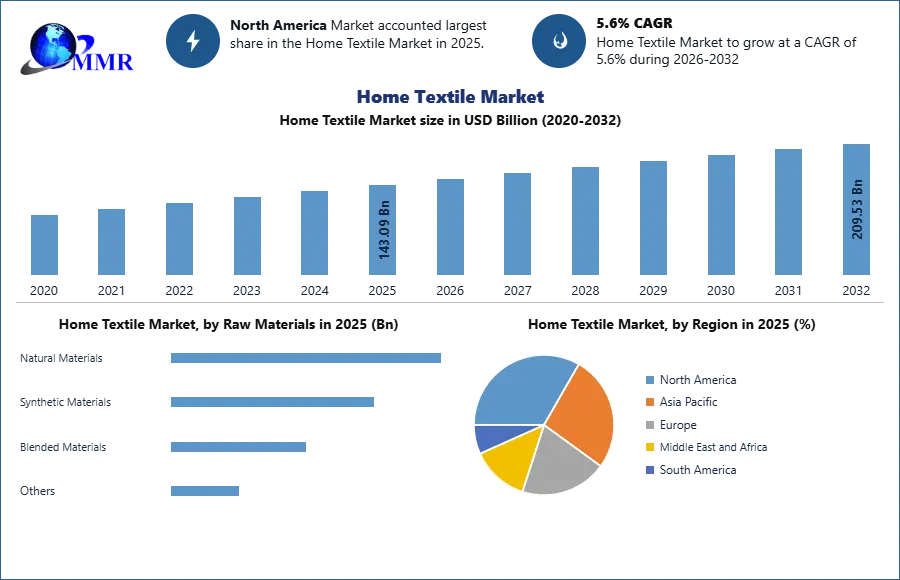
The Home Textile Market is experiencing growth as consumers place greater emphasis on comfort, aesthetics, and home personalization. Rising interest in interior design is influencing purchasing decisions across multiple textile categories.
Consumers are increasingly seeking products that improve both visual appeal and living comfort. This demand is encouraging manufacturers to develop products that combine design sophistication with functionality.
The market is also benefiting from broader home improvement trends. As consumers invest more in residential spaces, demand for textiles that contribute to overall ambiance and comfort continues to rise. This creates opportunities across both premium and value-oriented product segments.
Key Trends Driving Growth
One of the most influential trends shaping the market is the growing importance of home wellness. Consumers increasingly associate quality bedding, curtains, and furnishing fabrics with comfort, relaxation, and overall well-being.
Sustainability is becoming a major purchasing consideration. Buyers are paying greater attention to material sourcing, manufacturing practices, and environmental impact. This is encouraging manufacturers to explore sustainable textile solutions and responsible production methods.
Personalization is also gaining momentum. Consumers want living spaces that reflect individual tastes and lifestyles. As a result, customization options, unique designs, and premium collections are becoming increasingly important competitive differentiators.
Digital commerce is transforming how consumers shop for home textiles. Online platforms enable customers to compare products, explore design inspirations, and access a broader selection than traditional retail environments. This has expanded market reach and accelerated consumer engagement.
Interior design content on social media platforms is further amplifying demand. Home renovation projects, décor trends, and lifestyle influencers continue to inspire purchasing decisions across multiple demographics.
𝐃𝐨𝐰𝐧𝐥𝐨𝐚𝐝 𝐏𝐃𝐅 𝐁𝐫𝐨𝐜𝐡𝐮𝐫𝐞 @https://www.maximizemarketresearch.com/request-sample/201409/
Segment Insights
- Dominant Segment: Specific dominant segment information was not disclosed in the supplied MMR report and is therefore omitted.
- Fastest-Growing Segment: Specific fastest-growing segment information was not disclosed in the supplied MMR report and is therefore omitted.
- Bedding and comfort-oriented textile products continue to attract strong consumer interest.
- Decorative textile solutions are benefiting from rising demand for personalized living spaces.
- Sustainable textile offerings are becoming increasingly relevant across purchasing decisions.
- Digital retail channels are supporting broader consumer access to premium home furnishing products.
Regional Growth Story
The Home Textile Market is supported by global trends in urbanization, home improvement, and lifestyle enhancement. Consumers across developed and emerging economies are investing in products that improve residential environments.
Established markets continue to benefit from mature home furnishing industries and high consumer awareness of interior design trends. These regions remain important sources of innovation and premium product demand.
Emerging markets are becoming increasingly significant contributors to growth. Rising disposable incomes, expanding residential construction activity, and growing middle-class populations are creating favorable market conditions.
The result is a diversified market landscape with opportunities spanning multiple geographic regions and consumer segments.
Competitive Landscape
Competition within the Home Textile Market is moving beyond price and product availability.
Manufacturers are increasingly competing through design innovation, sustainability commitments, product quality, and brand positioning. This signals a market where emotional engagement and lifestyle alignment are becoming as important as functional performance.
For rivals, the implications are clear. Companies that fail to adapt to changing consumer expectations may find it difficult to maintain relevance. Consumers increasingly expect products that combine aesthetics, comfort, and environmental responsibility.
Over the next 12–24 months, expect stronger competition around sustainable materials, premium collections, customization capabilities, and direct-to-consumer strategies. Brands that effectively connect product offerings with lifestyle aspirations are likely to gain market share.
The industry is steadily transitioning from commodity textiles toward value-added lifestyle solutions.
Recent Developments
- Increased emphasis on sustainable textile production and material sourcing.
- Growing investment in premium and design-focused product collections.
- Expansion of digital retail channels and online consumer engagement.
- Rising focus on home wellness and comfort-oriented textile solutions.
- Continued innovation in product aesthetics and customization options.
Strategic Implications
The Home Textile Market is becoming increasingly aligned with broader lifestyle and wellness trends.
Manufacturers should focus on creating differentiated product portfolios that balance design, functionality, and sustainability. Consumer expectations continue to evolve beyond basic utility toward complete lifestyle experiences.
Retailers have opportunities to strengthen omnichannel strategies that connect digital inspiration with seamless purchasing experiences. Visual merchandising and content-driven marketing are becoming important competitive tools.
Investors should monitor sustainability initiatives, digital commerce performance, and premium product adoption rates. These factors are likely to influence future market leadership and profitability.
Organizations that successfully combine design innovation with operational excellence are likely to capture significant long-term value.
Future Outlook
The Home Textile Market is expected to remain closely connected to evolving consumer lifestyles, residential investment trends, and sustainability priorities. Demand for products that enhance comfort, aesthetics, and well-being is likely to remain a central growth driver.
As consumers continue to redefine the role of the home, textile products will play an increasingly important role in shaping living environments. The market’s future will be influenced by innovation, sustainability, and the ability to create meaningful consumer experiences.
The winners will be brands that transform home textiles into lifestyle solutions; the losers will be those that continue to compete solely on cost in a market increasingly defined by value and differentiation.
Analyst Perspective
“The Home Textile Market continues to evolve as consumers place greater emphasis on comfort, interior aesthetics, sustainability, and wellness-focused living environments. Innovation and changing lifestyle preferences will remain important factors shaping future market opportunities.” — Siddhi Dole, Research Analyst









Leave a Reply