
Key Highlights
-
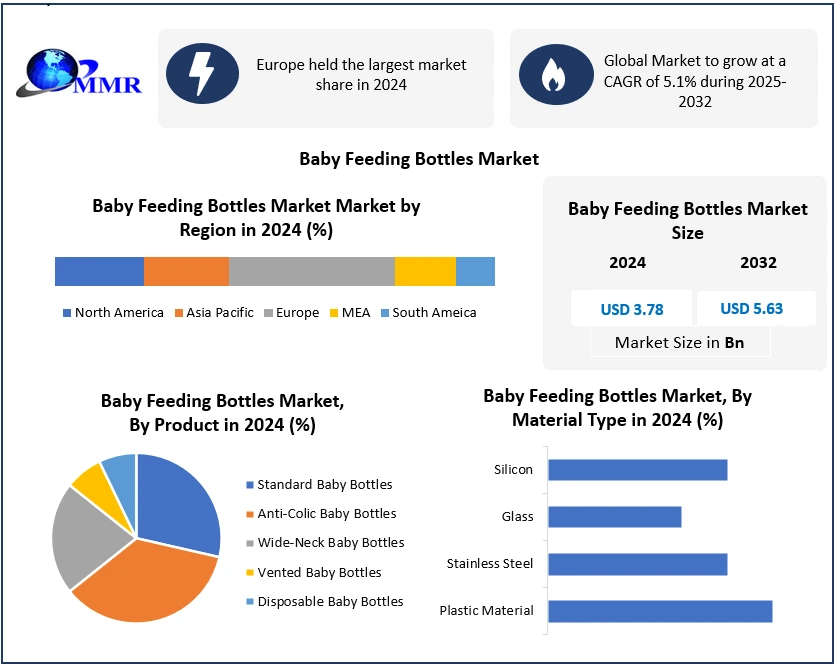
Baby Feeding Bottles Market was valued at USD 3.78 Bn in 2024 and is projected to reach USD 5.63 Bn by 2032, at a CAGR of 5.1%, confirming a steady, health‑linked growth path rather than a short‑term spike.
-
Growth is driven by rising birth rates in some regions, higher disposable incomes, and increasing awareness about safe, convenient feeding accessories.
-
The market spans plastic, glass and other materials, as well as multiple designs such as standard, wide‑neck, anti‑colic and specialty bottles tailored to infant comfort and safety.
-
E‑commerce and modern retail are expanding access to branded and premium baby feeding bottles, influencing how parents compare safety features and prices.
Why This Matters Now
Every USD added to the baby feeding bottles category is a direct reflection of how parents think about infant health, safety and convenience. With the market growing at 5.1% CAGR to USD 5.63 Bn by 2032, bottles have moved from simple containers to a frontline of trust in infant nutrition.
For FMCG and food & beverage leaders, baby feeding bottles sit at the intersection of formula, baby food and broader baby‑care ecosystems. They determine how products are prepared, consumed and perceived at home, directly affecting satisfaction with formula brands and complementary foods.
As parents scrutinize materials, design and brand claims more closely, companies that treat bottles as strategic brand touchpoints—not generic accessories—will shape loyalty across the first years of a child’s life.
Market Overview
The Global Baby Feeding Bottles Market size is forecast to rise from USD 3.78 Bn in 2024 to USD 5.63 Bn by 2032, at a CAGR of 5.1% over the period. This growth trajectory reflects a combination of demographic drivers and shifting parental expectations around safety and ease of use.
Baby feeding bottles are used for infant formulas, pumped breast milk and supplementary liquids, making them central to daily feeding routines. Their ubiquity means that changes in bottle design, material or perceived safety can ripple through demand for related FMCG categories such as formula, fortified milks and baby juices.
Manufacturers position bottles not only on functional attributes—flow rate, anti‑colic features, cleaning ease—but increasingly on health and wellness narratives, including BPA‑free materials and compatibility with breastfeeding.
Key Trends Driving Growth
Key growth drivers include rising awareness about infant nutrition, greater participation of women in the workforce, and the need for flexible feeding solutions that complement breastfeeding. As more mothers balance employment and caregiving, demand for reliable bottles for expressed milk and formula strengthens.
Consumer behavior is shifting toward branded, safety‑certified products, away from unbranded or low‑information options. Parents rely on peer reviews, pediatric advice and regulatory labels when choosing bottles that will be used multiple times a day.
Health and wellness trends are visible in the preference for BPA‑free plastics, medical‑grade silicone nipples, and glass bottles perceived as chemical‑safe. Clean‑label thinking crosses from food into hardware, with parents expecting clear disclosure on materials and design claims.
Sustainability initiatives include interest in longer‑lasting bottles, recyclable materials and reduced packaging around bottle products. Brands that align safety and environmental responsibility gain advantage among higher‑income, urban parents.
E‑commerce penetration is rising, offering parents wider choice and easy access to international brands. Online channels deepen competitive pressure on design, perceived quality and price, as comparison shopping becomes simple and review culture amplifies performance differences.
Request a Free Sample Copy or View Report Summary: https://www.maximizemarketresearch.com/request-sample/122393/
Segment Insights
-
Dominant Segment – Material: Plastic Baby Feeding Bottles
Plastic bottles are the dominant segment, supported by their light weight, impact resistance and relatively low cost. They are widely used across income tiers and geographies, especially where ease of handling and affordability matter most. -
Fastest‑Growing Segment – Material: Glass and Premium Alternatives
Glass and other premium materials are the fastest‑growing segment, as parents concerned about chemical migration and long‑term safety seek alternatives to conventional plastics. These bottles often target urban, health‑conscious consumers willing to pay for perceived safety and durability. -
Design Segments – Standard vs Wide‑Neck vs Anti‑Colic Bottles
Standard bottles remain core for everyday use, but wide‑neck designs simplify cleaning and filling, appealing to busy households. Anti‑colic bottles with engineered venting systems respond to specific health and comfort concerns, making them important for parents who want to reduce gas and discomfort. -
End‑Use Segments – Household vs Institutional
Household use drives most demand, with bottles purchased by parents and caregivers. Institutional settings—hospitals, clinics, childcare centers—add smaller but important volumes, often with stricter safety and hygiene requirements that influence product specifications.
Regional Growth Story
Regions with higher birth rates and growing middle classes, such as parts of Asia and Africa, contribute strong volume growth in baby feeding bottles. As incomes rise, parents shift from basic products to branded, feature‑rich bottles.
In Europe and North America, market growth is more closely tied to premiumization, material shifts and design innovation than to population increases. Parents in these regions often seek advanced anti‑colic designs, eco‑friendly options and bottles that integrate with breast pumps and other devices.
Urbanization, education and internet access across emerging markets amplify awareness of health and safety in infant products. This drives demand for baby feeding bottles that comply with international standards and feature clear material disclosures.
Competitive Landscape
The Baby Feeding Bottles Market includes global baby‑care brands, specialist bottle manufacturers and private labels from retailers. Competitive activity focuses on material innovations, ergonomic designs, anti‑colic technologies and compatibility with broader baby‑care ecosystems.
Companies investing in R&D for safer materials and improved venting systems signal a race to own the “trusted choice” position in parents’ minds. Rivals that do not keep pace on safety claims or design differentiation risk being relegated to low‑margin segments and losing shelf visibility in modern retail.
Over the next 12–24 months, strategic partnerships between bottle manufacturers and infant formula or baby food brands are likely to intensify. Co‑branding and bundled offerings—formula plus bottle, baby food starter kits—will signal deeper integration of hardware and nutrition, creating stickier customer relationships and higher lifetime value.
Recent Developments
-
Growing promotion of BPA‑free and non‑toxic materials across mainstream and premium baby feeding bottles.
-
Increased availability of anti‑colic and wide‑neck designs in both physical retail and online channels.
-
Expansion of e‑commerce as a key route‑to‑market for baby bottles, supported by detailed product pages and parent reviews.
-
Emerging interest in reusable, durable bottles with replaceable nipples and parts to reduce waste and long‑term cost.
Strategic Implications
For FMCG and food & beverage brands, baby feeding bottles are a critical interface with infant formula, fortified milks and baby beverages. Bottles that perform poorly—leak, harbor odors, or cause discomfort—can damage perceptions of the liquid products they carry, even when the formulation is strong.
Marketing and innovation teams should view bottle design as part of a holistic infant nutrition proposition. Aligning formula flows, mixing behavior and temperature guidance with bottle features improves feeding outcomes and reduces frustration for parents.
Retailers and e‑commerce platforms can use baby bottles as entry points into broader baby‑care baskets, bundling them with formula, wipes, diapers and complementary foods. Strategic assortment decisions—plastic vs glass, standard vs premium—shape margin profiles and brand positioning in the baby category.
Future Outlook
With the Baby Feeding Bottles Market expected to reach USD 5.63 Bn by 2032 at 5.1% CAGR, competition will intensify around health claims, material safety and design ergonomics. As regulatory scrutiny on plastics and chemicals rises, manufacturers may pivot further toward safer polymers and glass.
E‑commerce will deepen transparency, rewarding brands that can demonstrate real performance benefits and safety certifications while penalizing those that over‑promise. Integration with smart devices, warming systems and tracking apps could emerge, but the core will remain trust in materials and feeding comfort.
In this environment, the winners will treat baby feeding bottles as strategic health and brand assets embedded in the infant nutrition journey, while the losers will still treat them as generic accessories in the baby aisle.
Related Reports
Gaming Gadgets Market https://www.maximizemarketresearch.com/market-report/gaming-gadgets-market/125731/
Eyewear Market https://www.maximizemarketresearch.com/market-report/global-eyewear-market/21412/
Global Down and Feather Market https://www.maximizemarketresearch.com/market-report/global-down-and-feather-market/21816/
Analyst Perspective
“Baby feeding bottles may look simple, but they sit at the heart of how parents manage infant nutrition, safety and daily routines,” “With the market set to grow from USD 3.78 Bn to USD 5.63 Bn by 2032 at 5.1% CAGR, brands that invest in safer materials, smarter designs and tighter links to their nutrition portfolios will shape the next decade of trust in the baby category.”- Siddhi Dole
About Maximize Market Research
Maximize Market Research Pvt. Ltd. (MMR) is a global market research and consulting company that provides reliable, data-focused, and practical business insights. The firm serves a wide range of industries, including healthcare, pharmaceuticals, technology, automotive, electronics, chemicals, personal care, and consumer goods. Through market forecasts, competitive analysis, strategic consulting, and industry impact assessments, MMR helps organizations understand changing market conditions, identify growth opportunities, and make informed business decisions for long-term success.
2nd Floor, Navale IT Park Phase 3
Pune Banglore Highway, Narhe
Pune, Maharashtra 411041, India
+91 9607365656
sales@maximizemarketresearch.com
.webp "Asset Tracking Market to Reach USD 47.69 Billion by 2032")






Leave a Reply