
Key Highlights
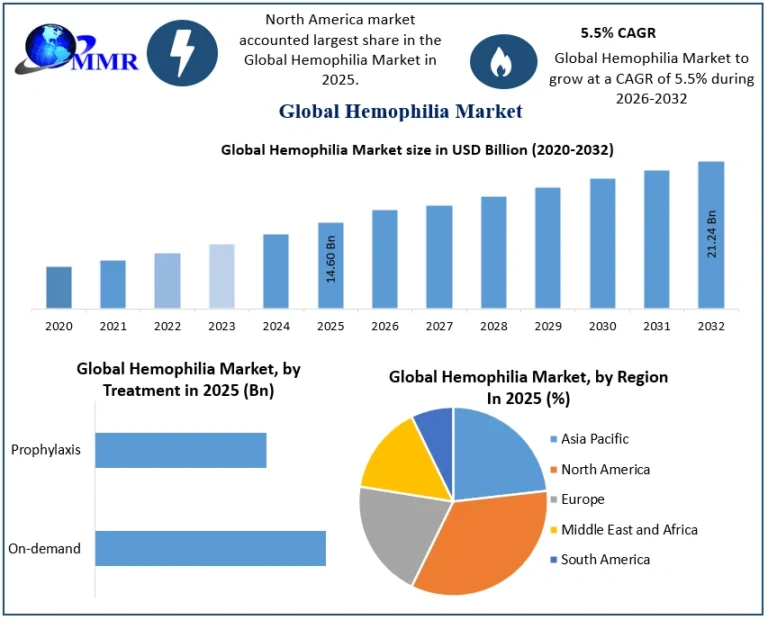
- Market valued at USD 14.60 billion in 2025.
- Forecast to reach USD 21.24 billion by 2032.
- Expected CAGR of 5.5% during 2026–2032.
- North America remains the largest regional market.
- Asia Pacific records the fastest regional expansion.
- Hemophilia A dominates global treatment demand.
- Prophylactic therapy gains momentum through long-term disease management.
- Gene therapy and non-factor replacement therapies are reshaping treatment standards.
- Rising diagnosis rates continue expanding the addressable patient population.
Why This Matters Now
The hemophilia treatment landscape is entering a structural transition. Gene therapies promise long-term disease control, while non-factor therapies reduce treatment burden and improve adherence. At the same time, expanding diagnosis programs and stronger healthcare investments are increasing patient access in emerging markets. Companies capable of combining innovative biologics with broader global commercialization are positioned to capture the next phase of industry growth.
Market Overview
The Hemophilia Market covers therapies used to prevent and manage inherited blood clotting disorders, including replacement therapies, immune tolerance induction (ITI), gene therapy, and non-factor treatment approaches. Demand continues to rise as healthcare systems identify more patients and expand access to specialized treatment.
Disease prevalence remains the market’s primary demand driver. An increasing number of diagnosed patients requires lifelong disease management, creating recurring demand for clotting factors and advanced biologics. Growing awareness programs and improved diagnostic capabilities further strengthen patient identification worldwide.
Supply dynamics are shifting from conventional plasma-derived products toward recombinant therapies, extended half-life products, and gene-based treatments. Manufacturers continue investing in innovation that lowers treatment frequency while improving clinical outcomes.
Macroeconomic support comes from rising healthcare expenditure, favorable reimbursement policies in developed markets, and expanding specialized hemophilia treatment centers. However, high therapy costs, manufacturing complexity, regulatory requirements, and unequal healthcare access continue to limit adoption across several developing countries.
Key Trends Driving Growth
Gene therapy is becoming one of the industry’s most significant technological advances. Single-administration treatments have the potential to reduce bleeding episodes for extended periods, fundamentally changing long-term disease management.
Extended half-life clotting factors continue gaining adoption by reducing infusion frequency. This improves patient convenience while lowering treatment burden, particularly among pediatric and severe hemophilia populations.
Non-factor replacement therapies are expanding rapidly, especially for patients who develop inhibitors against conventional clotting factor treatments. These therapies offer alternative mechanisms that improve treatment effectiveness while reducing dosing frequency.
Digital health technologies and home-based treatment programs are improving adherence through remote monitoring and personalized disease management. Healthcare providers increasingly integrate digital platforms into long-term patient care.
Growing emphasis on newborn screening, early diagnosis, and patient-centered healthcare policies strengthens long-term treatment outcomes while expanding demand for advanced therapeutics.
Although sustainability is not a primary market driver, improved manufacturing technologies and more efficient biologics production continue supporting scalable supply of advanced therapies.
Explore detailed analysis, insights, and growth opportunities
Segment Insights
Dominant Segment: Hemophilia A
Hemophilia A represents the largest market segment because it accounts for the majority of diagnosed cases worldwide. The condition occurs approximately four times more frequently than Hemophilia B, making it the primary focus of therapeutic development and commercial investment.
Most recombinant factor therapies and newly introduced biologics target Hemophilia A. Pharmaceutical companies continue allocating research budgets toward this segment because of its larger patient population and stronger commercial potential. The broad availability of approved therapies also reinforces its market leadership.
Fastest-Growing Segment: Prophylaxis Therapy
Prophylactic treatment is expected to record the fastest growth throughout the forecast period. Unlike on-demand therapy, prophylaxis focuses on preventing bleeding episodes before they occur through scheduled clotting factor administration.
The business impact is significant. Preventive treatment reduces hospitalizations, lowers long-term healthcare costs, improves productivity, and enhances patient quality of life. These advantages continue encouraging physicians, healthcare providers, and reimbursement agencies to expand prophylactic treatment adoption.
Additional Segment Insights
Replacement therapy remains the backbone of current clinical practice because recombinant and plasma-derived clotting factors continue serving as standard treatment for many patients.
Immune tolerance induction (ITI) therapy remains important for managing patients who develop inhibitors against replacement therapies, preserving treatment effectiveness in complex cases.
Gene therapy represents the industry’s most transformative emerging segment. Continued clinical development and commercialization could substantially alter long-term revenue distribution as one-time treatments gain regulatory acceptance.
Regional Growth Story
North America maintains its leadership position and is projected to reach approximately USD 8.26 billion by 2032. Strong reimbursement systems, widespread adoption of prophylactic care, specialized hemophilia treatment centers, and rapid commercialization of advanced biologics continue supporting regional dominance.
Europe remains a mature market supported by established healthcare infrastructure, extensive rare disease programs, and strong regulatory frameworks encouraging innovation in recombinant therapies and gene therapy development.
Asia Pacific is expected to record the fastest regional growth during the forecast period. Rising healthcare spending, expanding healthcare infrastructure, and improving diagnosis rates across China, India, Japan, and other regional economies are increasing access to modern hemophilia treatments. Growing government investment also strengthens long-term market potential.
The Middle East, Africa, and South America continue representing emerging opportunities. Improvements in healthcare infrastructure, disease awareness, and treatment accessibility are gradually expanding market penetration despite ongoing reimbursement and affordability challenges.
Competitive Landscape
The global Hemophilia Market remains highly consolidated, with established biotechnology and pharmaceutical companies controlling a substantial share through diversified treatment portfolios.
Takeda Pharmaceutical Company maintains a strong position across recombinant and plasma-derived therapies, reinforcing its leadership in conventional treatment categories. CSL Behring continues strengthening its presence through plasma-derived products and recombinant coagulation factors, while Novo Nordisk expands its portfolio with extended half-life therapies and innovative treatment solutions.
- Hoffmann-La Roche has strengthened competitive differentiation through non-factor replacement therapy, broadening treatment options for patients with inhibitors. Pfizer continues investing in recombinant therapies and advanced biologics, while Sanofi focuses on RNA-based technologies and next-generation therapeutic platforms.
Bayer remains active in recombinant factor VIII products, whereas BioMarin Pharmaceutical advances gene therapy development for Hemophilia A. Octapharma continues expanding plasma-derived and recombinant therapy offerings, while Spark Therapeutics strengthens industry innovation through ongoing gene therapy research.
Competition increasingly centers on product innovation, regulatory approvals, strategic collaborations, and geographic expansion rather than pricing alone. Companies capable of delivering durable therapies with lower treatment frequency are improving their competitive positioning as healthcare systems prioritize long-term clinical value.
Recent Developments
- Gene therapy continued expanding through broader clinical evidence generation and post-approval monitoring to validate long-term safety and durability.
- Healthcare providers increased adoption of non-factor replacement therapies, particularly for patients with inhibitors to conventional clotting factor treatments.
- The World Federation of Hemophilia Annual Global Survey 2024 reported a 6% increase in global identification of people living with hemophilia, reflecting improved diagnosis and reporting.
- The 2025 World Hemophilia Day campaign emphasized “Access for All: Women and Girls Bleed Too,” highlighting improved diagnosis and treatment access for historically underserved patient populations.
Future Outlook
Companies that successfully commercialize durable gene therapies while expanding affordable access across emerging healthcare markets will define the next competitive leadership in the global Hemophilia Market.
About Maximize Market Research
Maximize Market Research Pvt. Ltd. (MMR) is a global market research and consulting company that provides reliable, data-focused, and practical business insights. The firm serves a wide range of industries, including healthcare, pharmaceuticals, technology, automotive, electronics, chemicals, personal care, and consumer goods. Through market forecasts, competitive analysis, strategic consulting, and industry impact assessments, MMR helps organizations understand changing market conditions, identify growth opportunities, and make informed business decisions for long-term success.
Contact Us :
2nd Floor, Navale IT Park Phase 3
Pune Banglore Highway, Narhe
Pune, Maharashtra 411041, India
+91 9607365656
sales@maximizemarketresearch.com




Leave a Reply