
The aviation industry operates within a framework where safety is the highest priority. As international air travel bounces back and expands, global aviation authorities are placing an even heavier emphasis on airport ground safety and emergency preparedness. At the heart of these safety protocols are Airport Rescue and Firefighting (ARFF) vehicles. These highly specialized, heavy-duty machines are engineered to navigate rugged airfield terrains rapidly and combat intense jet-fuel fires within seconds of an incident.
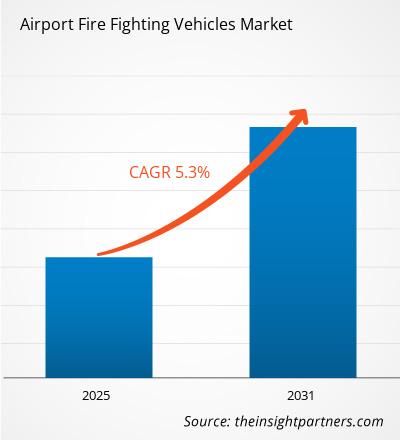
According to an in-depth market study by The Insight Partners, the global airport fire fighting vehicles market is on a steady upward trajectory. The Airport Fire Fighting Vehicles Market is expected to register a CAGR of 4.21% from 2026 to 2034, with the market size expanding from US$ 1.32 Billion in 2025 to US$ 1.92 Billion by 2034. This growth underscores the global commitment to upgrading emergency fleets to meet contemporary safety benchmarks.
Primary Catalysts Driving Market Growth
The steady growth of this market is fueled by a mix of infrastructure expansion, strict international regulations, and technical evolution.
1. Rising Air Traffic and Airport Expansions
As flight frequencies and passenger numbers steadily climb worldwide, existing airports are reaching maximum capacity. To handle this influx, governments and private operators are investing heavily in building new airports and adding additional runways or terminals to current facilities. More runways mean a larger area to cover during an emergency. Because aviation regulators mandate that emergency response vehicles must reach any point of the operational runway within strict time limits (often under three minutes), expanding airfields naturally requires adding more ARFF units to the fleet.
2. Stringent Regulatory Compliances
Global bodies like the International Civil Aviation Organization (ICAO) and the Federal Aviation Administration (FAA) maintain incredibly strict regulations regarding airport safety categories. An airport’s category determines the minimum volume of water, foam, and complementary extinguishing agents it must keep on standby, alongside the minimum number of rapid-intervention vehicles required. Non-compliance can lead to downgraded airport ratings or operational halts. This regulatory pressure forces airport authorities to continuously replace aging equipment with cutting-edge emergency vehicles.
3. Technological Innovation and Fleet Modernization
Traditional firefighting vehicles are being phased out in favor of smarter, faster, and more versatile designs. Modern ARFF vehicles feature advanced technologies such as:
-
High-reach extendable turrets (HRET): Allowing crews to pierce an aircraft fuselage and apply extinguishing agents directly into the interior cabin from a safe distance.
-
Thermal imaging cameras: Helping operators navigate smoke-filled airfields or locate hot spots hidden within the aircraft structure.
-
Eco-friendly powertrains: There is a growing push toward hybrid and electric ARFF vehicles to align with global airport sustainability targets.
Get a PDF Sample– https://www.theinsightpartners.com/sample/TIPRE00025480
Strategic Landscape: Prominent Market Players
The global marketplace features a blend of established international giants and specialized regional manufacturers driving innovation forward. Key players shaping the industry include:
-
CARROZZERIA CHINETTI S.R.L.
-
CHENGLI SPECIAL AUTOMBILE CO., LTD.
-
E-ONE
-
Kronenburg
-
Oshkosh Corporation
-
Rosenbauer International AG
-
SIMON-CARMICHAEL International Group Limited
-
Vimal Fire Controls Pvt. Ltd.
-
WISS
-
ZIEGLER (CIMC Group)
These manufacturers focus heavily on custom engineering, high-acceleration chassis designs, and optimized fluid pumping systems. Collaborations between vehicle manufacturers and technology firms are becoming standard practice to integrate real-time telemetry, predictive maintenance alerts, and autonomous driving aids into new fleets.
Regional Variations in Demand
The demand dynamics for airport firefighting vehicles vary noticeably across different parts of the world:
-
Asia-Pacific: This region stands as a major growth engine. Explosive middle-class expansion and economic growth in nations like China and India have triggered massive greenfield airport projects and regional connectivity schemes, creating a sustained demand for brand-new ARFF fleets.
-
North America and Europe: These markets are primarily driven by modernization, tech upgrades, and environmental mandates. Airports here are heavily focused on replacing older diesel-guzzling units with ultra-modern vehicles featuring high-efficiency foam systems and lower carbon footprints.
-
Middle East: Boasting massive international transit hubs, airports in this region prioritize ultra-high-capacity, rugged vehicles designed to perform reliably in extreme heat and dusty desert environments.
Get Full Copy of This Report- https://www.theinsightpartners.com/buy/TIPRE00025480
Future Outlook
Looking ahead, the airport fire fighting vehicles market is positioned for an era defined by automation and green technology. Over the next decade, we will likely witness the deployment of semi-autonomous or fully remote-controlled ARFF units that can enter highly volatile explosion zones without putting human crews at immediate risk. Furthermore, the transition toward zero-emission emergency fleets will accelerate as manufacturers refine heavy-duty electric chassis capable of delivering the instant torque and rapid acceleration required for emergency response. Supported by a projected market valuation of US$ 1.92 Billion by 2034, manufacturers who prioritize smart integration, green energy, and rapid-discharge technology will lead the charge in securing the runways of tomorrow.
About Us
The Insight Partners is a one-stop industry research provider of actionable intelligence. We help our clients in getting solutions to their research requirements through our syndicated and consulting research services. We specialize in industries such as Semiconductor and Electronics, Aerospace and Defense, Automotive and Transportation, Biotechnology, Healthcare IT, Manufacturing and Construction, Medical Devices, Technology, Media, and Telecommunications, as well as chemicals and Materials.
Contact Us
If you have any queries about this report or if you would like further information, don’t hesitate to get in touch with us:
Contact Person: Ankit Mathur
E-mail: ankit.mathur@theinsightpartners.com
Phone: +1-646-491-9876





Leave a Reply